7th Grade Math Activities
30 free 7th grade lessons, each built around a virtual manipulative that students use right in the browser. There is no login or download. Pick a topic or math tool below, or browse by Common Core standard.
- Finding Favorable Outcomes in a Two-Dice Table
Students use a 6-by-6 table to highlight and count the two-dice outcomes that match an event.
7.SP.C.8 - How Many Times Will It Happen?
Students predict approximately how many times a die event will happen in a given number of rolls.
7.SP.C.6 - List All 36 Outcomes from Two Dice
Students list all 36 ordered outcomes from two dice and explain why their list is complete.
7.SP.C.8 - Spin, Count, and Estimate
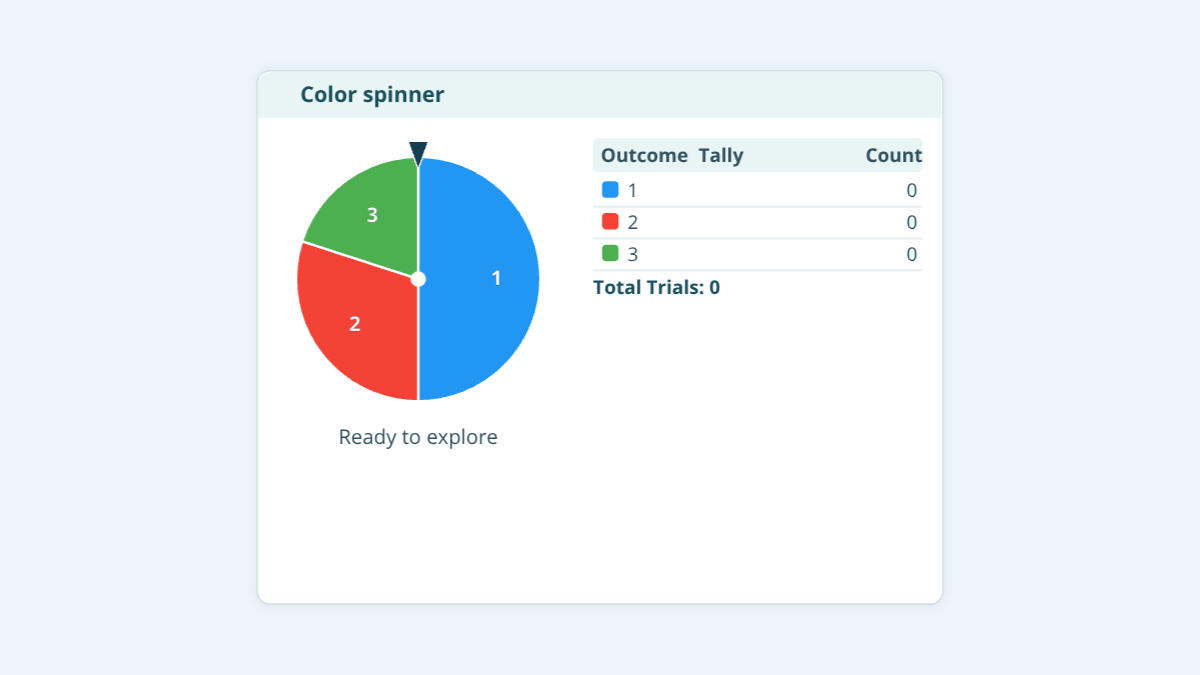
Students use repeated spins to calculate relative frequency, estimate a probability, and predict an approximate number of outcomes.
7.SP.C.6 - Two Chance Outcomes, One Event
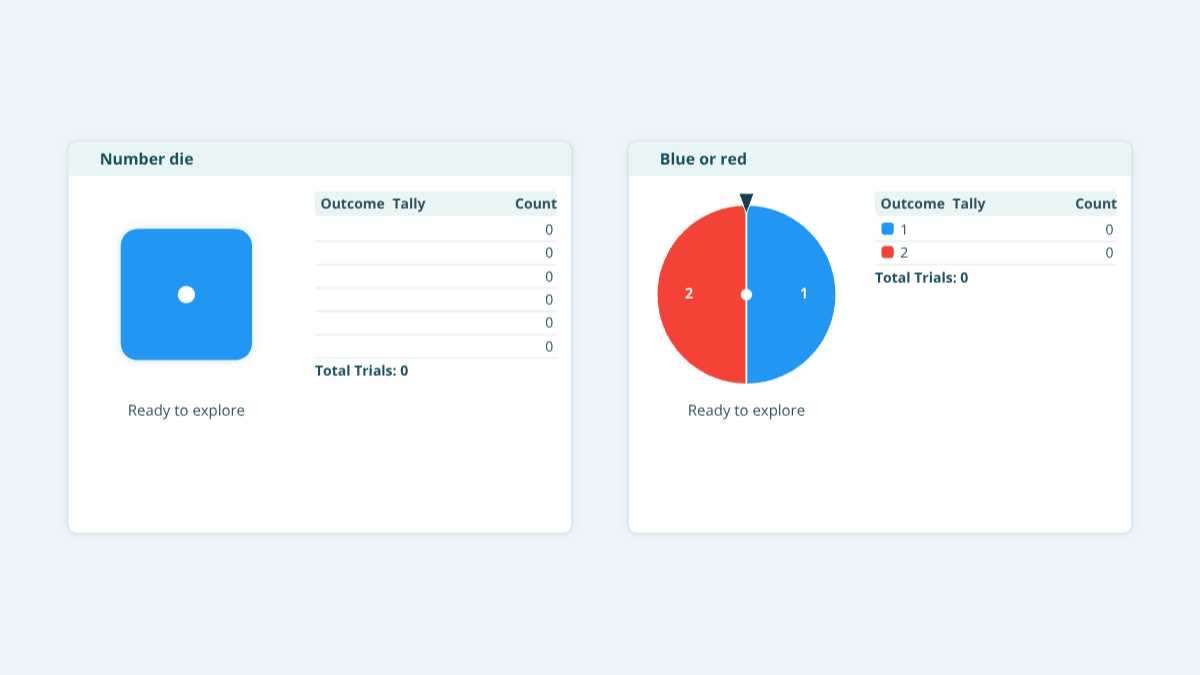
Students run trials with a die and a spinner, then identify when both parts of an event happen.
7.SP.C.8 - When Do Two Dice Match?
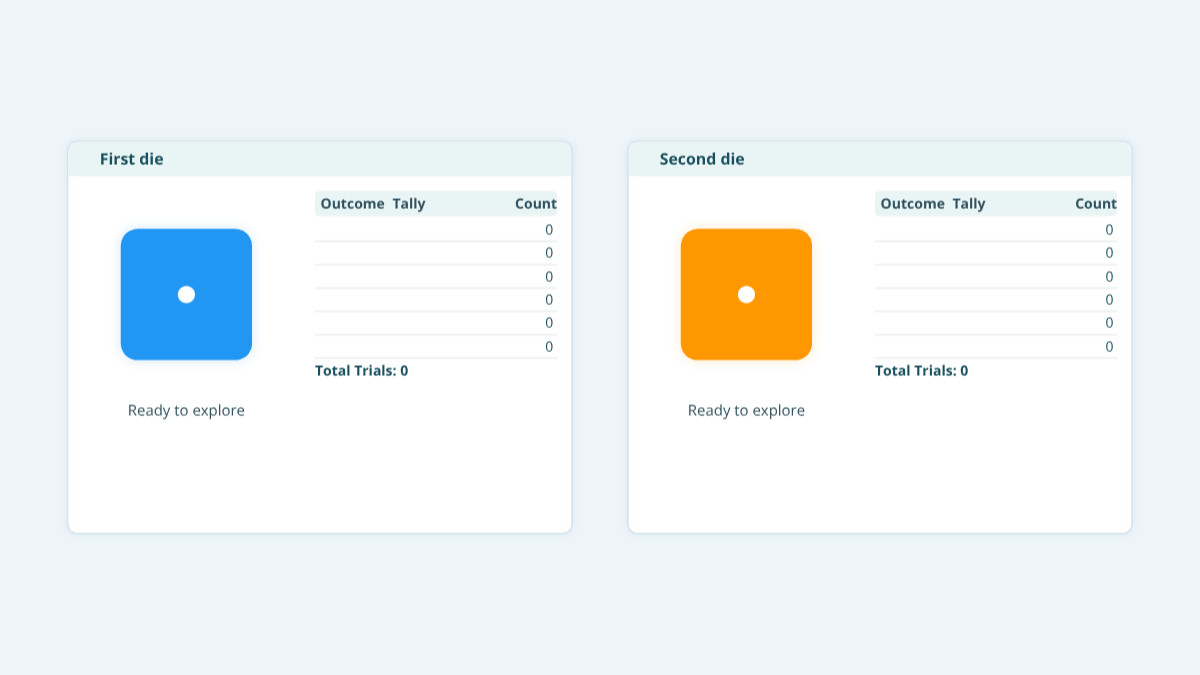
Students use pairs of die faces to find and simulate the chance that two dice match.
7.SP.C.8 - When Results Differ from the Model
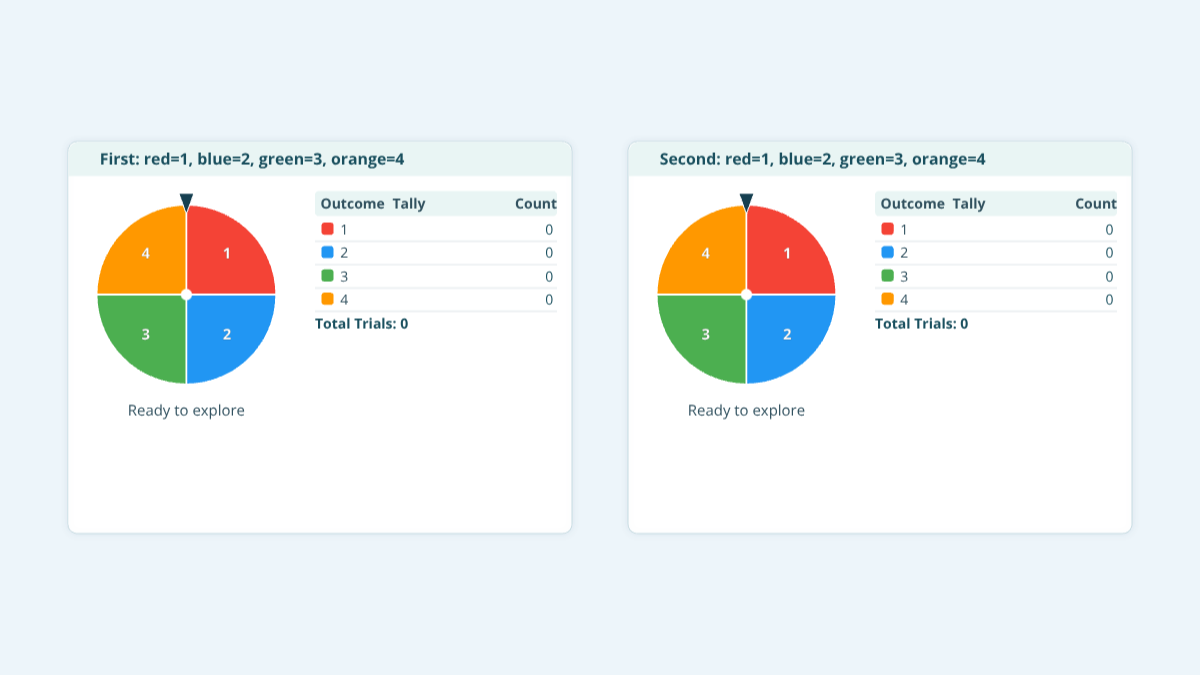
Students compare a model probability with observed results and explain why they may differ.
7.SP.C.7 - Where Does It Belong on the Likelihood Scale?
Students place chance events on a scale from 0 to 1 and explain their choices.
7.SP.C.5
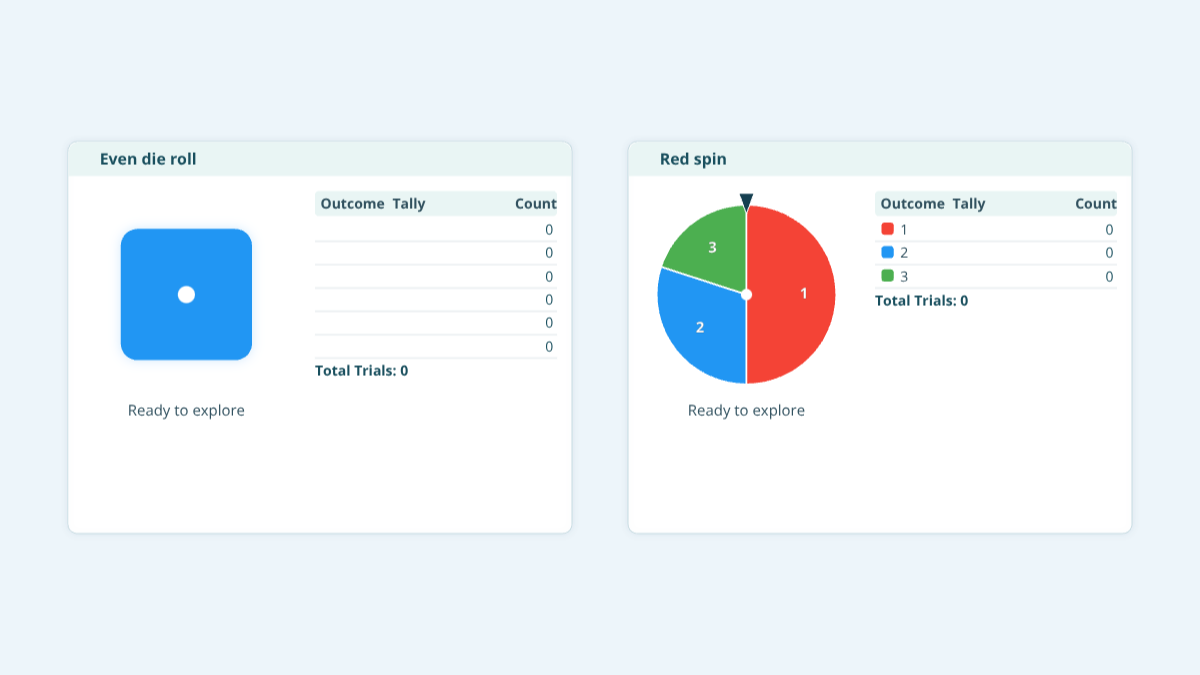
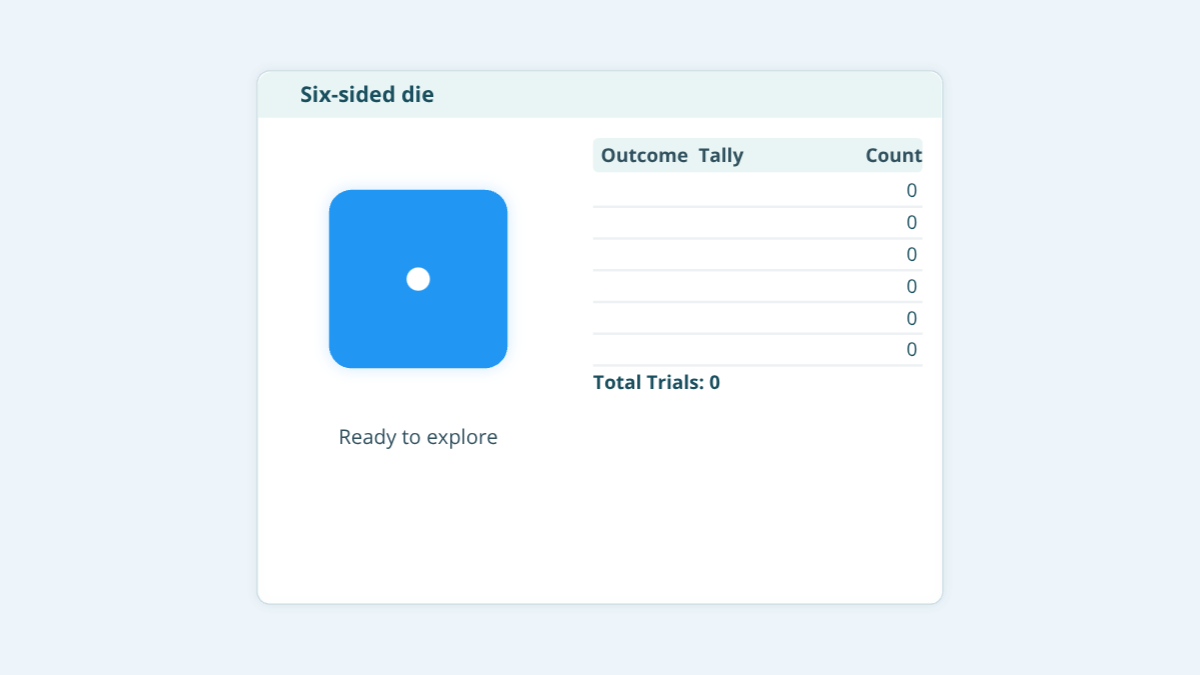
- Combine Signed x Tiles and Unit Tiles
Students combine signed x tiles and unit tiles to add and subtract linear expressions.
7.EE.A.1 - Distribute a Factor with Algebra Tiles
Students use algebra tiles to show what happens when a number multiplies a sum, then write an equivalent expression.
7.EE.A.1 - Keep Both Sides Equal with Algebra Tiles
Students use tiles to undo two operations and find x while keeping both sides equal.
7.EE.B.4 - Make Equal Groups with Algebra Tiles
Students arrange a linear expression into equal groups and describe it as a product.
7.EE.A.1 - Solve Equations with Equal Groups of Tiles
Students use equal groups of tiles to solve an equation such as 3(x + 2) = 21.
7.EE.B.4 - Two Views of the Same Tiles
Students use algebra tiles to compare an expanded expression with an equivalent factored expression.
7.EE.A.2
- How Many Triangles?
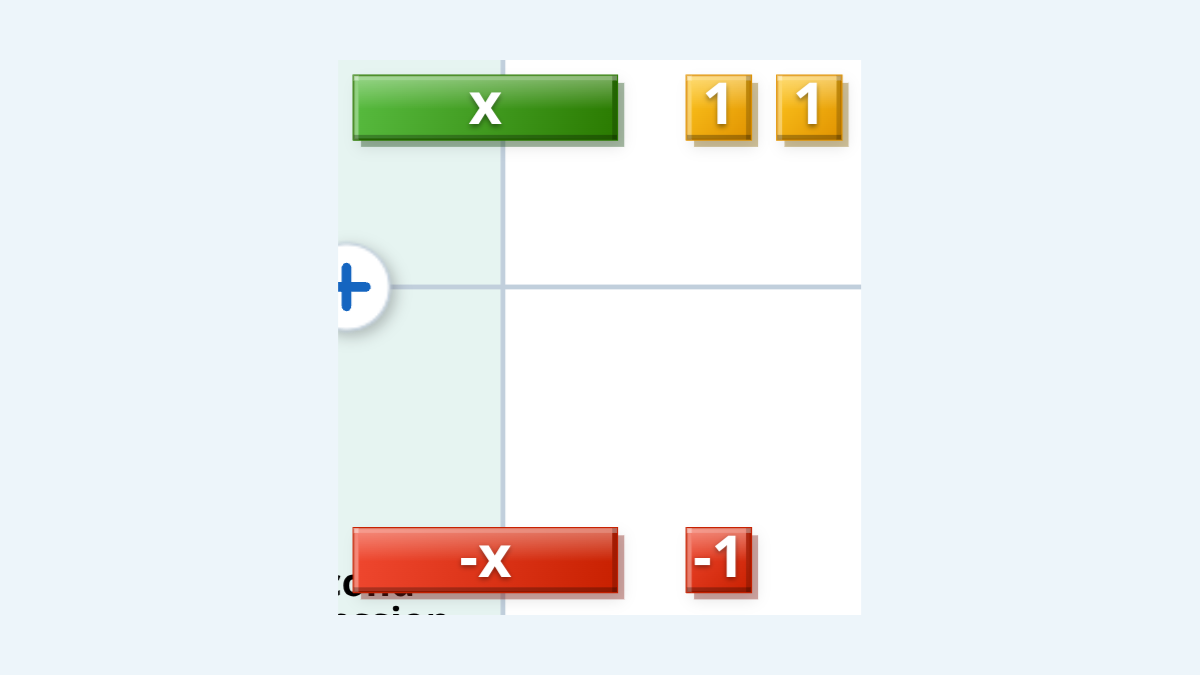
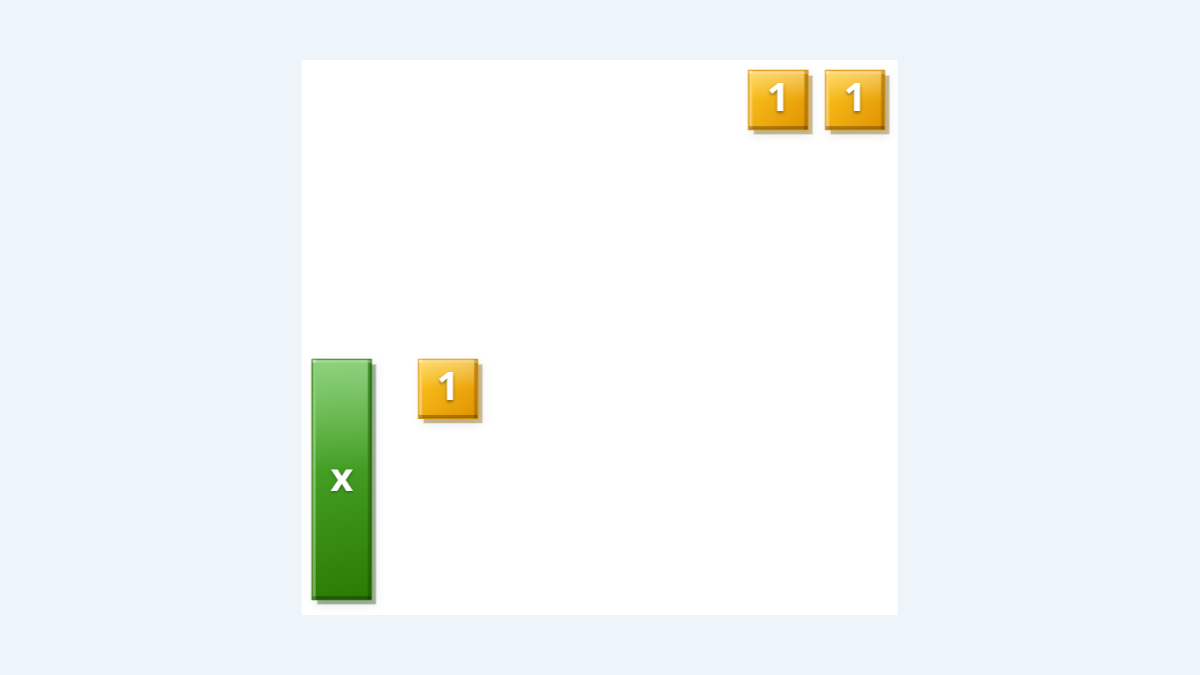
Students build triangles from side and angle conditions and explain when they make one, many, or no triangles.
7.G.A.2 - Measure Polygons on a Scaled Geoboard
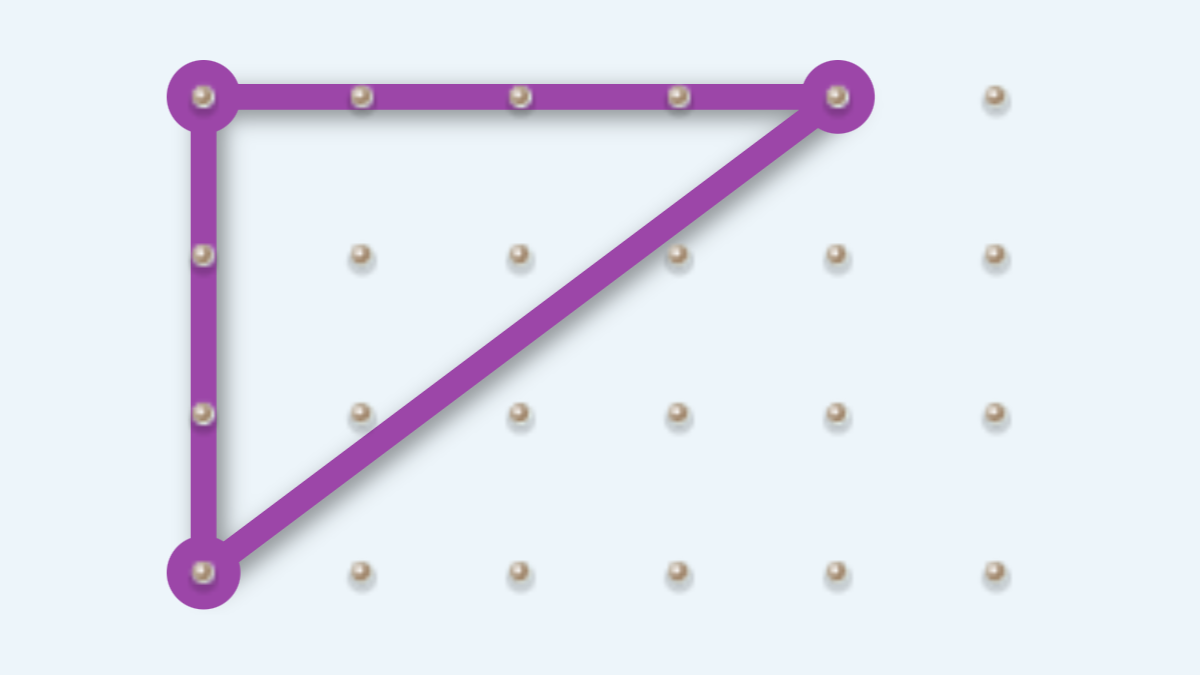
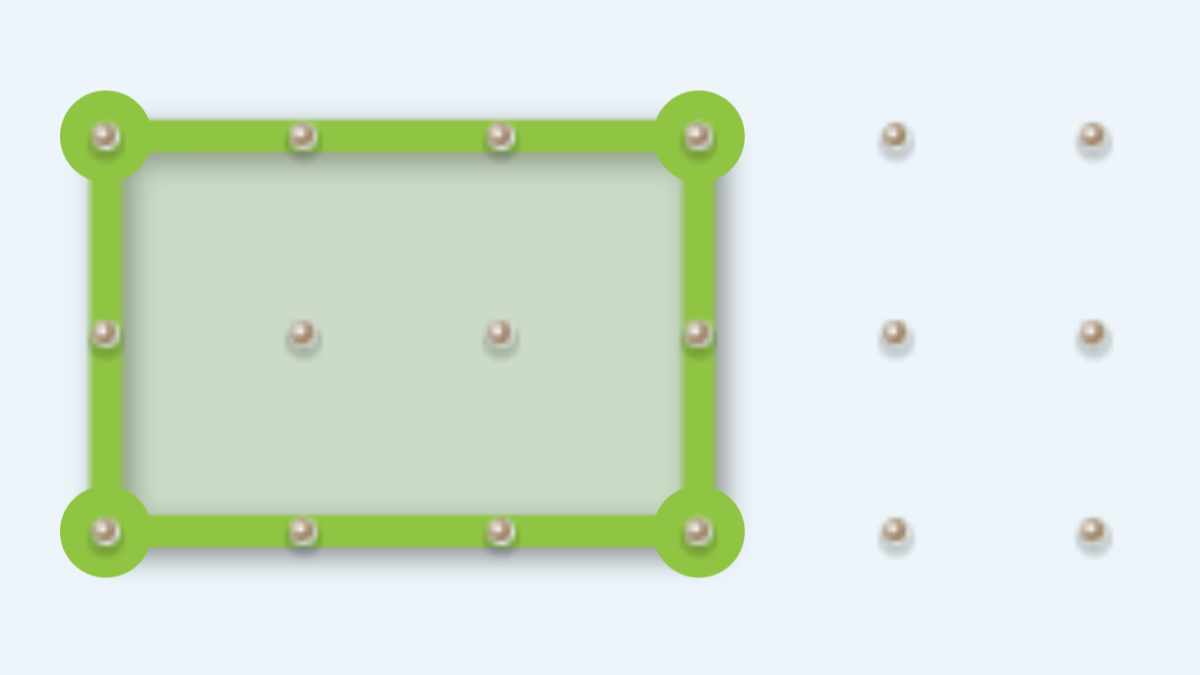
Students find the area and perimeter of polygons on a scaled coordinate grid.
7.G.B.6 - Scale Shapes on a Geoboard
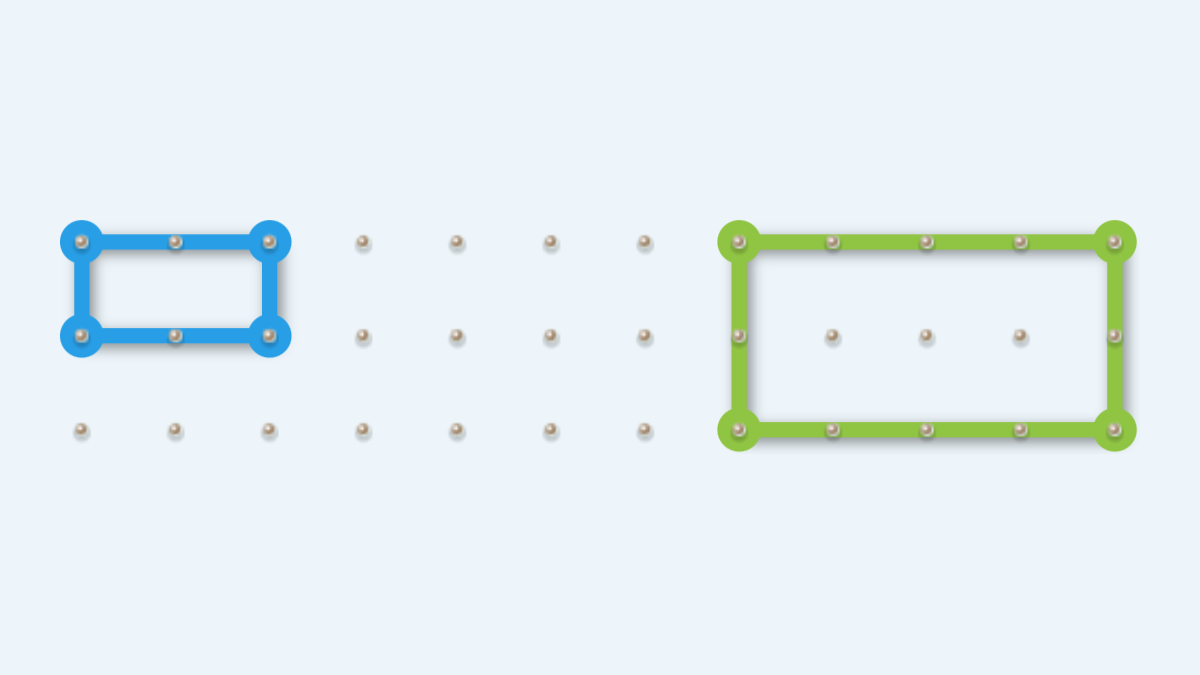
Students enlarge or reduce a coordinate-grid shape by a scale factor.
7.G.A.1
- Combine and Cancel Integer Chips
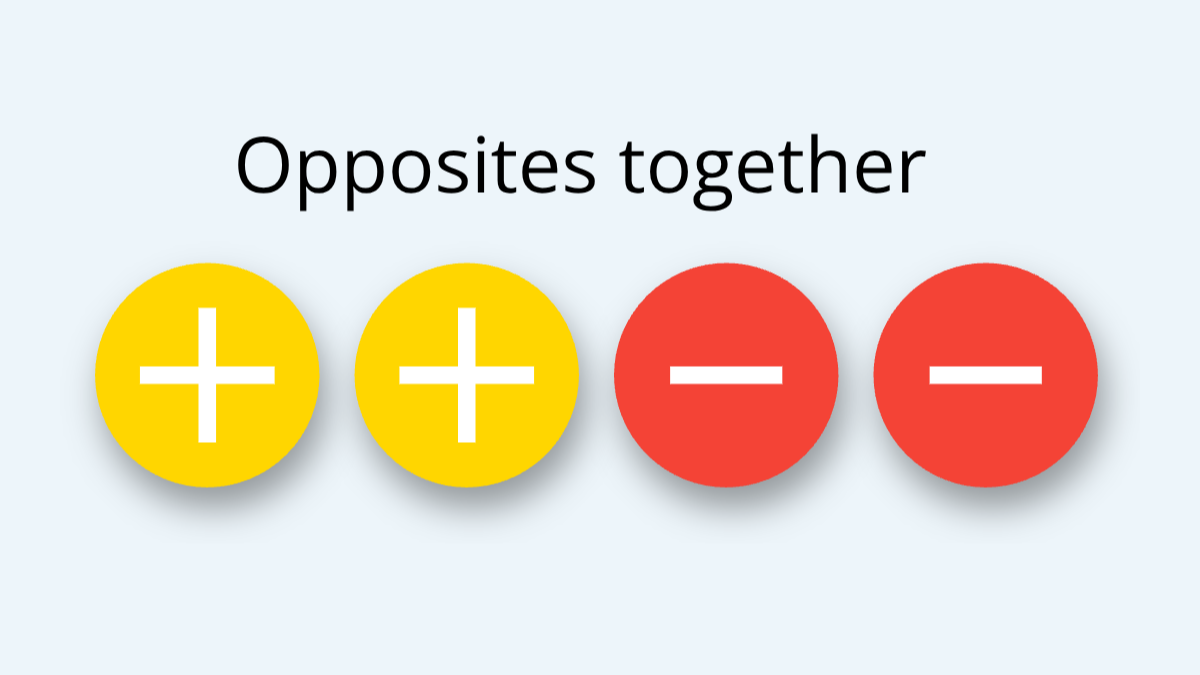
Students combine positive and negative chips, cancel zero pairs, and use the remaining chips to find a sum.
7.NS.A.1 - Make Zero Pairs to Subtract Integers
Students add zero pairs without changing a starting value, then remove the requested chips to subtract integers.
7.NS.A.1 - Track a Balance with Integer Chips
Students use integer chips to represent changes in a balance and explain the result of several transactions.
7.NS.A.3
- Fractional Quantities, Per One
Students use Number Bars to find how much of one quantity there is per one unit of another when both quantities involve fractions.
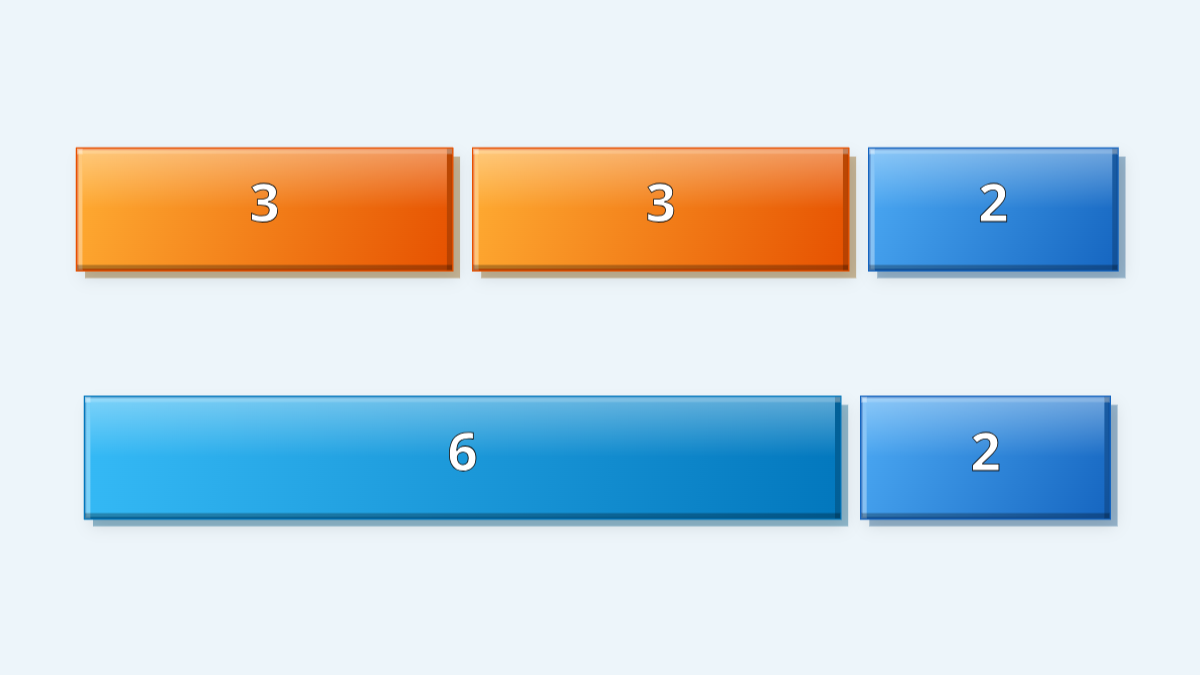
7.RP.A.1 - Where Does the 2-Bar Go?
Students use Number Bars to show a variable and two operations in a word problem.
7.EE.B.4
- Inequalities on a Number Line
Students show the solution interval for an inequality in the form px + q compared with r on a number line.
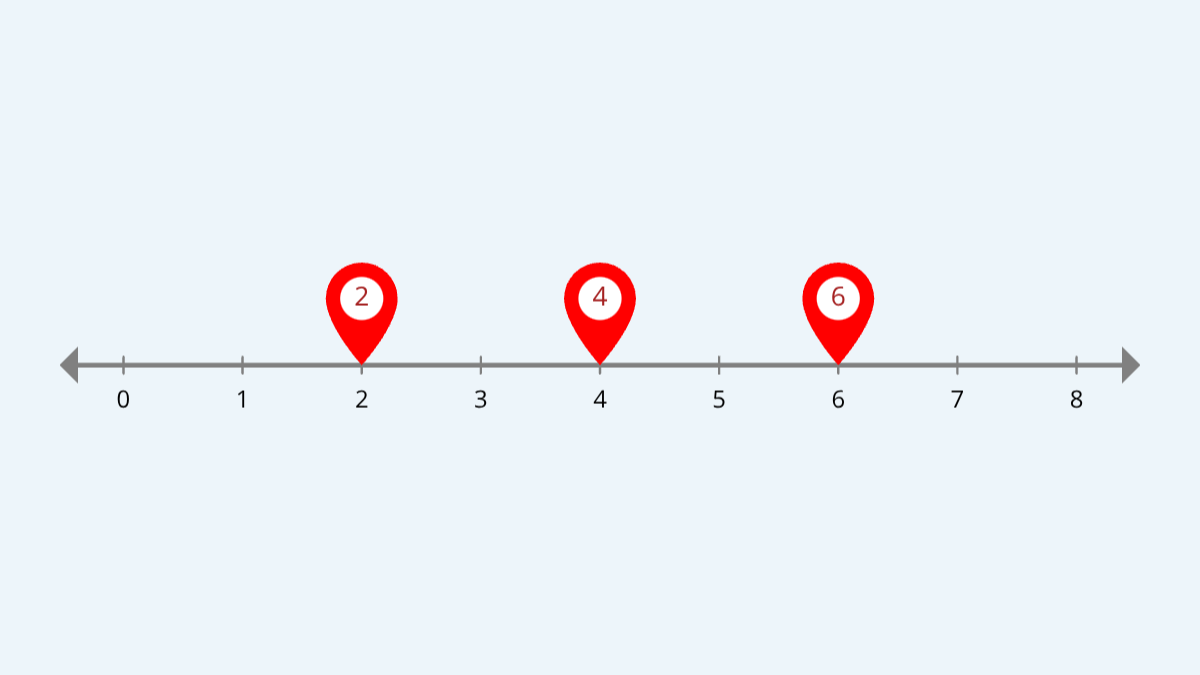
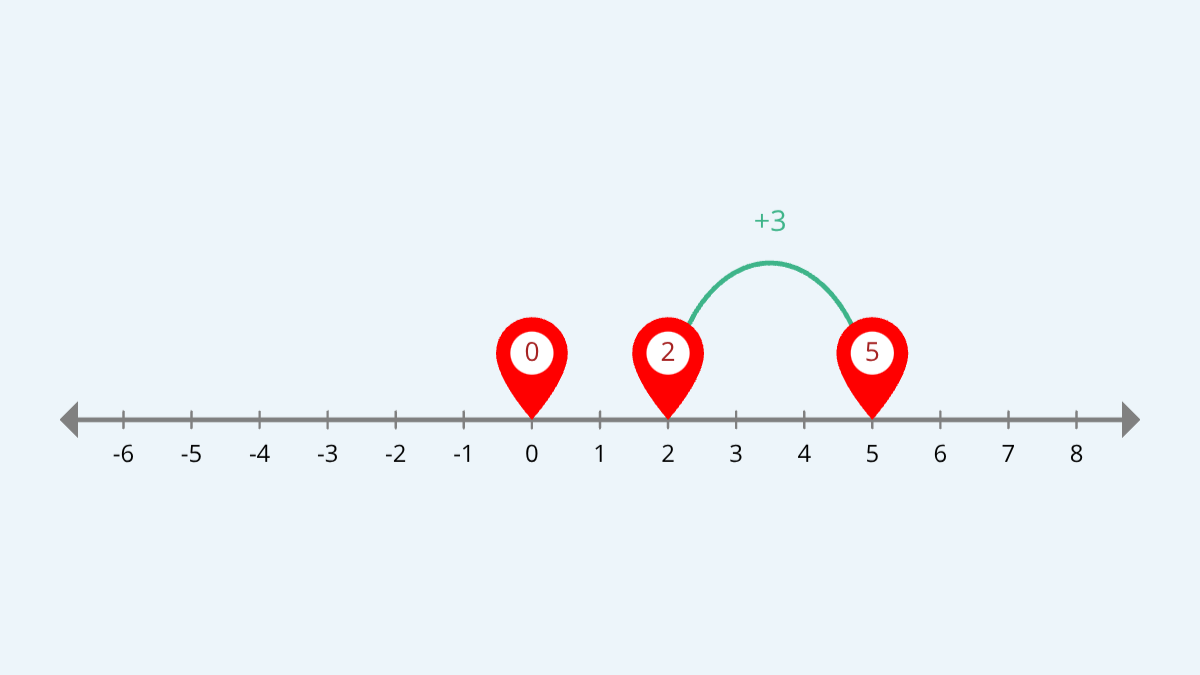
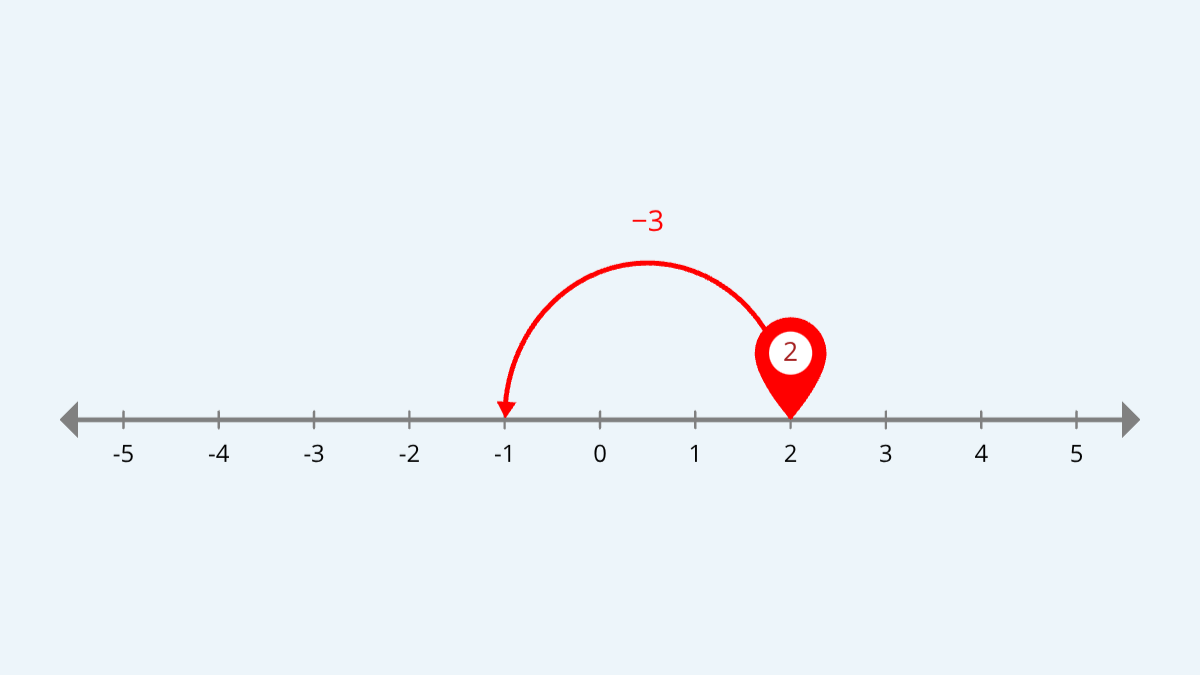
7.EE.B.4 - Subtract by Adding the Opposite
Students show subtraction as adding the opposite on a number line.
7.NS.A.1
- Find the Whole with Percent Bars
Students use a fraction bar to find an unknown part or original whole in a percent problem.
7.RP.A.3
7th Grade Data & Graphs Activities
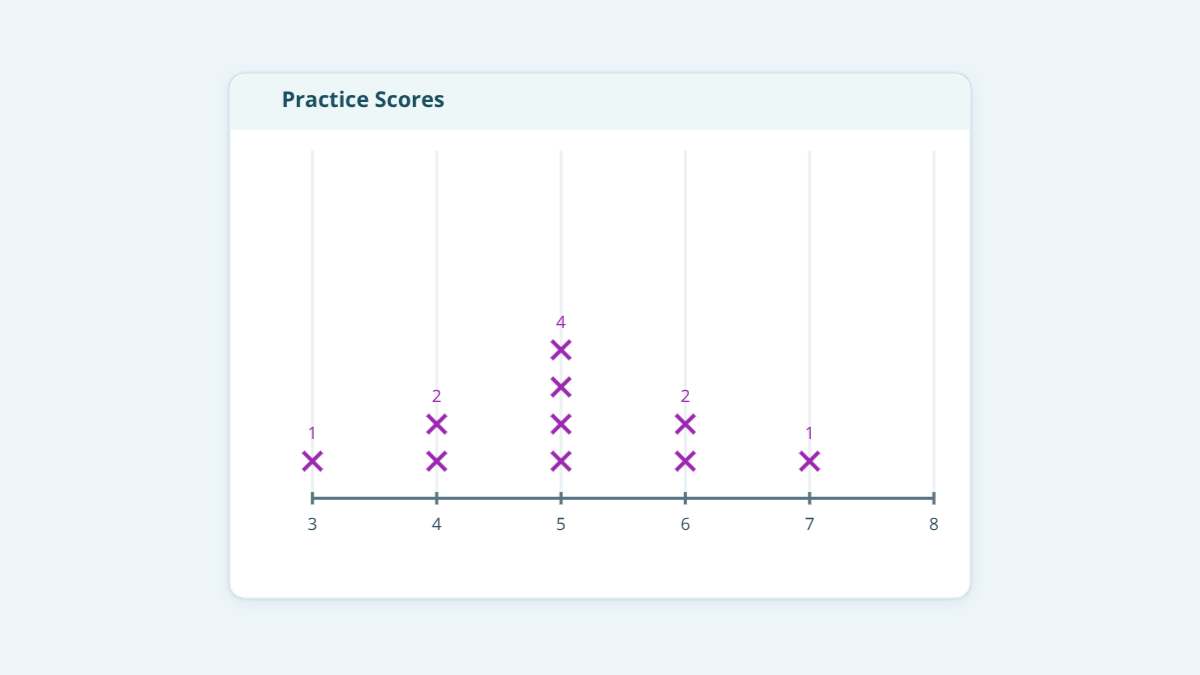
Open Data & Graphs →- Where Do the Scores Gather?
Students compare the centers and overlap of two score distributions shown on a graph.
7.SP.B.3